
I had owned Middlemarch for eleven years and read the first forty pages four times. This summer the club chose it, and I decided to read it the way it was first read: in parts, a few chapters at a time, with a notebook.
These are the notes. They are not a review, and there are a few spoilers, so stop reading at the end Part Four if you would rather not know.
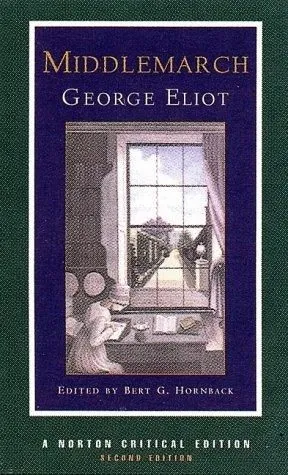
Parts One to Three: patience
It is slow, and it is meant to be. Eliot takes a chapter to tell you what a character looks like and another to tell you what they think they look like.
What I wrote down
- Dorothea’s plan for the cottages, which is better than anyone around her admits.
- The dinner party at which nobody says what they mean.
- Lydgate, who arrives like the hero of a different book.
If we had a keen vision and feeling of all ordinary human life, it would be like hearing the grass grow and the squirrel’s heart beat.
That sentence is in Chapter 20, and it is the one I keep coming back to.
Part Four
Halfway, and unexpectedly gripped
Somewhere around here the book stops being homework.
Parts Four to Six: the middle
The marriages go wrong in two quiet ways, and the book is kind to nobody and fair to everyone. The finest chapters are the unremarkable ones, where two people sit in a room and the reader understands more than either of them.
A note for first-time readers
Keep a list of who is whose cousin. I got as far as Chapter 29 before I made one, and wish I had started at Chapter 3.
If you only have ten minutes
Read the Finale last, as it was written, and read the Prelude first. Between them, they are the best argument for the book.
Parts Seven and Eight: the long way home
I finished it on a train, and missed my stop. The club meets on Thursday to talk about it, and I am bringing the notebook. If you are on the fence, the shop has copies, and so does the library.